


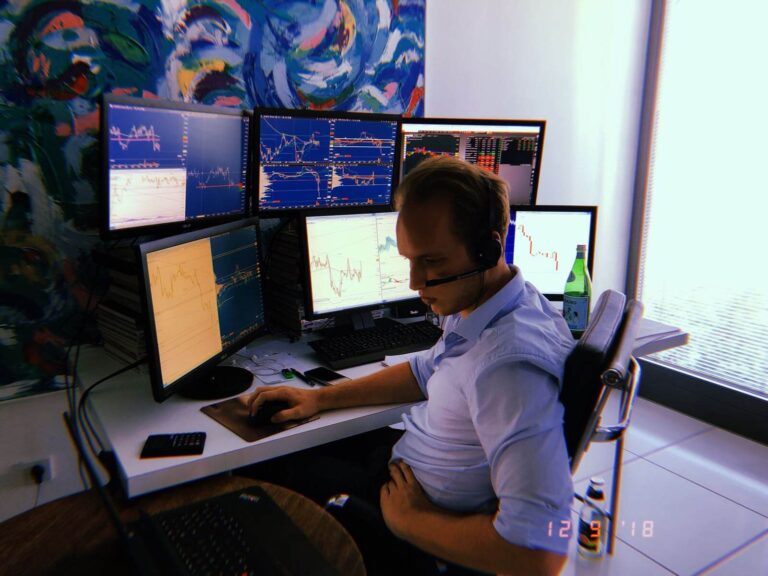
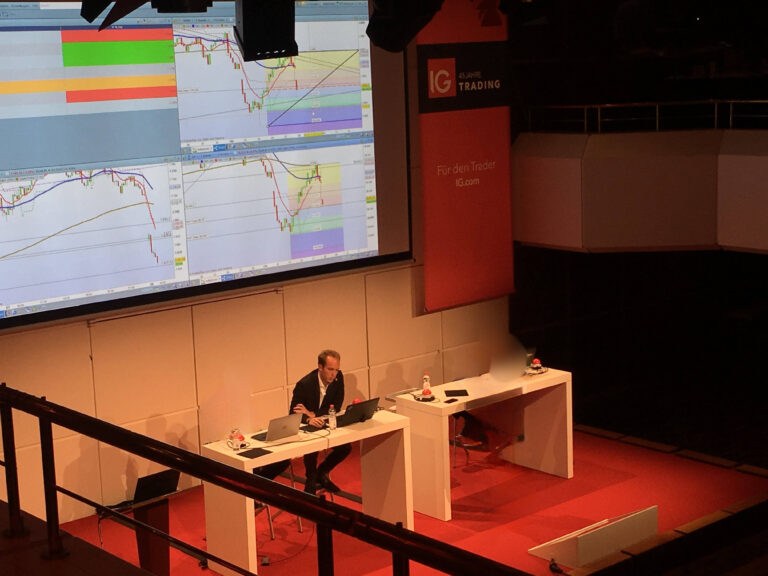
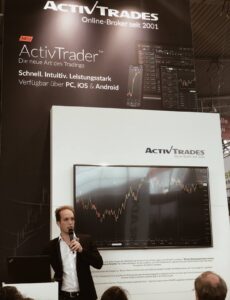
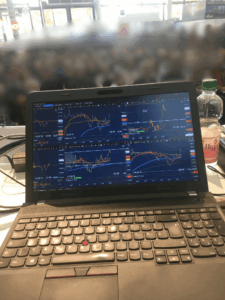

Lennard Kraft vor seinen Handelsmonitoren

Über mich

Lennard Kraft

10+Jahre Echtgeldhandel
100+Webinare als Referent
B.Sc.Economics, Universität Hohenheim
Autorin Finance Research Letters, 2026
3wissenschaftliche Arbeiten zu Bitcoin
2025Finanzkraft gegründet

Werdegang

  1. 2015 bis 2018

    Ich beginne mit eigenem Kapital im Aktienhandel. Beim Aufbau meines Eigenhandels erziele ich die ersten größeren Gewinne. Später kommen Futures und Optionen dazu.

  2. 2018 bis 2020

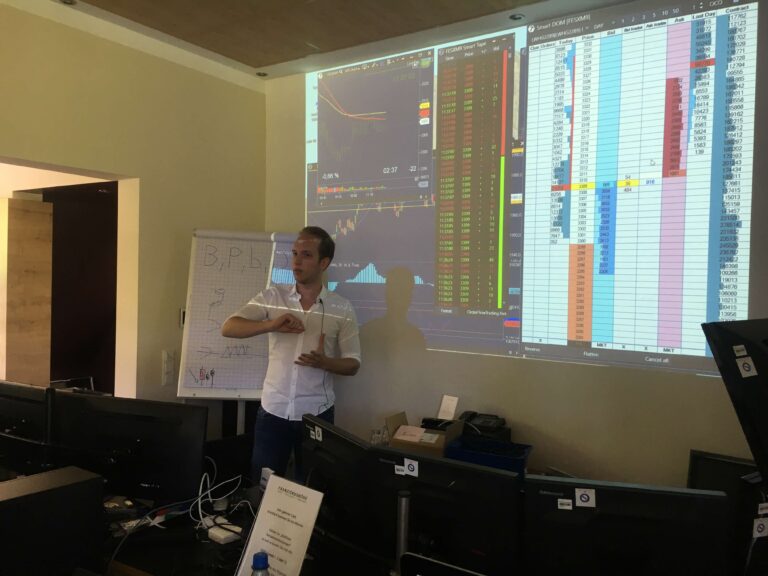
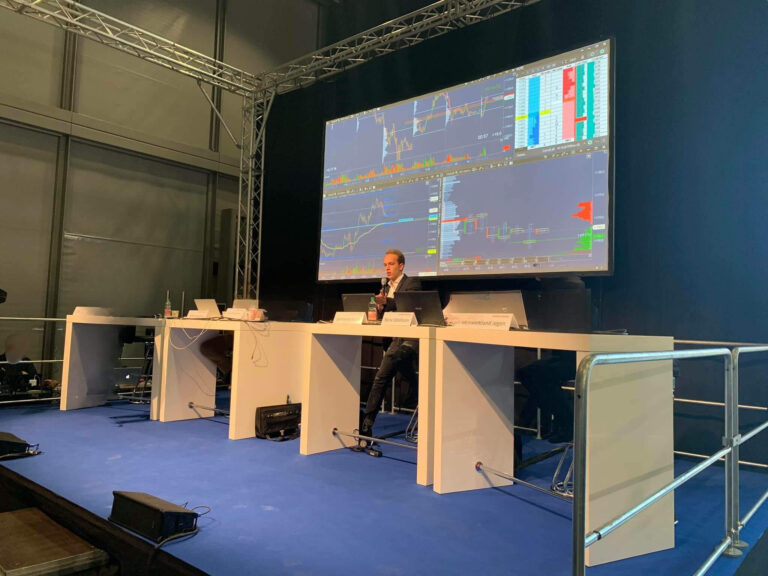
    Ich spreche auf Seminaren, Messen und Brokerveranstaltungen und halte über 100 Webinare im deutschsprachigen Raum.

    • Börsenseminare in Lohr am Main
    • Invest Messe Stuttgart
    • World of Trading Frankfurt
    • IG Markets & ActivTrades
    • 100+ Online-Webinare
    Trading-Seminar 2018 Live-Trading & Online-Webinar 2018 World of Trading 2018 IG Markets Event 2019 Invest 2019, Vortrag ActivTrades World of Trading 2019
    Trading-Seminar 2018
  3. Ab 2022

    Ich studiere an der Universität Hohenheim im Bachelor of Science in Economics.

    Schwerpunkte

    • Makroökonomie
    • Finance
    • Unternehmenssteuerrecht
    • Abschluss in Mathematik und Data Science
  4. 2024

    In meiner Bachelorarbeit untersuche ich die Preisdynamik von Bitcoin und ihre Verbindung zu traditionellen Märkten.

  5. 2025

    Ich schreibe ein Seminar-Paper über Saison- und Momentumeffekte bei Bitcoin.

  6. Ende 2025

    Ich gründe Finanzkraft, um professionelle Marktanalyse, Trading-Praxis und fundierte Finanzbildung zu verbinden. Ich starte auf Social Media mit meinem eigenen Schulungskonzept.

  7. 2025/26

    Mein erstes Online-Intensiv-Seminar unter der eigenen Marke Finanzkraft umfasst rund 20 Live-Lektionen, zweimal pro Woche, von November 2025 bis Anfang 2026. Daraus entsteht die heutige Mastery-Ausbildung.

    Finanzkraft Online-Seminar 2025/26
    • Trading-Fundament
    • Quantitative Modelle
    • Derivate
    • Fundamental- und Intermarket-Analyse
    • und vieles mehr
  8. 2026

    Mit Prof. Dr. Peter Schmidt verfasse ich einen Fachartikel über den Tagesrhythmus von Bitcoin seit den Spot-ETFs. Im September 2026 besteht der Artikel die Vorprüfung bei Finance Research Letters (Elsevier). Im Oktober 2026 erscheint er.

    ErschienenZum Artikel

Forschung

Bitcoin as a Financial Asset

Im Rahmen meiner Abschlussphase an der Universität Hohenheim habe ich mich intensiv mit der Rolle von Bitcoin im Kontext traditioneller Finanzmärkte beschäftigt.

Fachartikel · Oktober 2026

Trading to the fixing: Bitcoin’s intraday volume and the New York benchmark window after the spot ETFs

Gemeinsam mit Prof. Dr. Peter Schmidt, RIT Croatia

Finance Research Letters 113 (2026) 110932 · Open Access

Abstract im Original

Bitcoin trades continuously and has no exchange clock of its own. Using five-minute data from 2020 to 2026, we show that its intraday activity concentrates around the 15:00–16:00 New York window that US spot Bitcoin ETFs use to value their holdings, a benchmark fixing window common across issuers, and that this concentration is markedly stronger after the funds launched in January 2024. We identify the anchoring with US daylight saving transitions: a pattern tied to New York hours must shift one UTC hour twice a year, while one tied to a fixed UTC hour cannot. When New York moves to daylight saving time, the winter fixing hour loses most of its volume premium. This daylight-saving effect is weak before the launch and roughly three times larger after it (interaction −0.13 versus −0.40; pooled difference p < 0.001), and it persists beyond the April 2024 halving. Placebo break dates indicate the strengthening is gradual rather than a discrete event, consistent with a progressive institutionalization of Bitcoin trading. The result replicates on a second exchange. Hour of day predicts trading volume and volatility, but not return direction.

Bitcoin zeigt wiederkehrende Muster im Tages-, Wochen- und Jahresverlauf, teils ähnlich wie US-Aktien. Besonders deutlich ist ein Momentum-Effekt in den letzten vier Stunden des Tages.

Abstract im Original

This study examines seasonal and momentum effects in Bitcoin markets, focusing on the period from April 2020 to December 2024. The analysis covers intraday, intraweek, and intrayear seasonal patterns, as well as short term momentum effects. The study also examined whether momentum continues into the next day after a “momentum day”. The end-of-the-month phenomenon is investigated as well.

Bitcoin exhibits significant intraday seasonality, indicating a relevant momentum effect. This effect occurs in the last four trading hours from 8 pm till the end of a day. Several intraday momentum strategies, buying this last four hours, were tested and delivered notable results. Conversely on a day after a “momentum day” results were mixed. In some market conditions, momentum persisted, while in others, a reversal was observed.

The intraweek analysis highlights a trend-behavior, but no period with significant outperformance. Mondays and Wednesdays have the strongest average returns. Intramonth analysis revealed a strong end-of-the-month effect, particularly between the 25th of one month and the 5th of the next. Intrayear findings indicate that Bitcoin reflects seasonal patterns observed in U.S. equities, such as the “Sell in May and Go Away” effect.


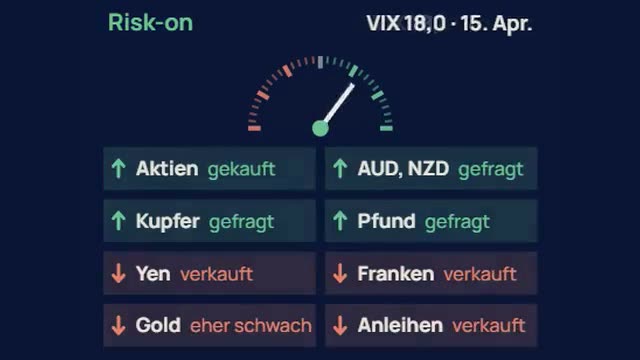
Seit März 2020 verhält sich Bitcoin wie ein Risk-on-Asset. Am besten entwickelt er sich, wenn es an den US-Märkten gut läuft. Wer bei hohem VIX nicht investiert war, konnte die großen Einbrüche vermeiden.

Abstract im Original

This study investigates Bitcoin’s price dynamics to explore its role as a financial asset and how it interacts with traditional markets. This investigation is crucial, as the connection between Bitcoin and the U.S. stock market has become increasingly relevant in recent years. The research demonstrates that since March 2020, Bitcoin has functioned as a risk-on asset, exhibiting optimal performance during favorable U.S. market conditions. I developed linear regression models, using the VIX Index and VX term structure, to demonstrate, how low and high VIX volatility regimes affect Bitcoin prices. For these two investigations, equity curves were plotted, pointing out, that investors could avoid Bitcoin’s sharp drawdowns, if they stayed out of the market during high VIX regimes. Furthermore, this research presents a valuation tool, based on the TQQQ ETF, to determine overbought and oversold areas. Bitcoin and the ETF demonstrate exhibit rangebound behavior, making this relationship to a useful timing component. Common statistical metrics are used to determine a normal distribution between TQQQ and Bitcoin, to prove the effectiveness of the tool.

Bitcoin-Seminar

Aus unserer Forschung entwickle ich mit Prof. Dr. Peter Schmidt ein Seminar: Bitcoin richtig kaufen und sicher selbst verwahren.

Interesse vormerken
Blick aus dem Cockpit auf Felder, Wald und Wolken
Lennard Kraft im Cockpit

Erst die Checkliste, dann der Start

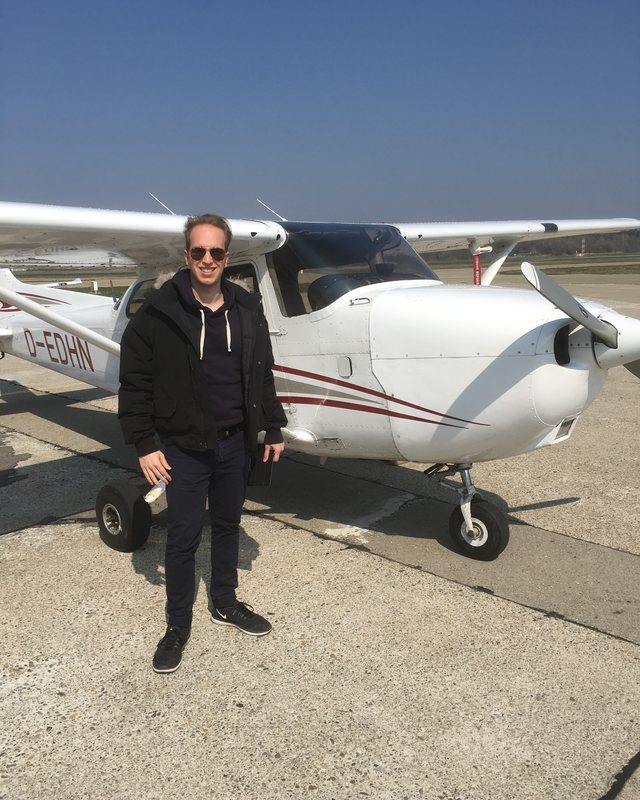
Mit 14 habe ich mit dem Segelfliegen begonnen, mit 17 meine erste Fluglizenz (PPL-A) erworben. Beim Fliegen gibt es vor jedem Start eine Checkliste, für jede Lage eine Regel. Genau dieses Prinzip nutze ich auch für die Börse.

Lennard Kraft im Cockpit vor dem Start, 2014

2014Vor dem Start

Lennard Kraft an einer Cessna vor dem Hangar, 2014

2014Am Hangar

Lennard Kraft vor der Maschine auf dem Vorfeld, 2019

2019Vor der Maschine

Blick durch die Frontscheibe auf die Startbahn, 2019

2019Auf der Startbahn